PDRN Microneedling vs PDRN Injectables: What UK Clinics Should Choose and Why

If you are deciding between PDRN delivered with microneedling and PDRN (polynucleotides) delivered as an injectable, the most practical UK clinic rule is this:
-
Choose PDRN microneedling when you want a protocol-led, course-based skin quality treatment that integrates into an existing microneedling workflow with controlled depth, documented endpoints, and structured aftercare.
-
Choose PDRN injectables when you require anatomical precision, deeper tissue placement, and you already operate within injectable governance frameworks (prescriber pathway where applicable, complication management, insurer approval).
This guide is written for UK clinics building regenerative skin quality services by choosing either PDRN microneedling or PDRN Injectables .
What is PDRN and How Does it Work?
 PDRN (Polydeoxyribonucleotide) is a purified DNA fragment complex, commonly derived from salmonid sources, used in aesthetic and regenerative practice for its tissue repair and biostimulatory effects.
In published regenerative and aesthetic dermatology literature, PDRN/polynucleotides are commonly described as supporting:
-
A2A adenosine receptor activation, linked with fibroblast activity
-
Collagen synthesis and extracellular matrix remodelling
-
Angiogenesis (microcirculation support)
-
Anti-inflammatory pathways
-
Dermal hydration support through water-binding behaviour
What this means for client outcomes is simple: improvements are usually progressive, not instant. Many clinics see visible changes begin around 3 to 4 weeks, with structural dermal change developing over 4 to 12 weeks, aligning with collagen maturation.
PDRN Microneedling
 When PDRN is delivered via microneedling using a medical-grade device such as imedpen x, you are combining:
-
Mechanical collagen induction therapy
-
Topical mesotherapy-style infusion through micro-channels
Device-led Control That Supports Repeatable Protocols
A key advantage of a device-led approach is repeatability. With imedpen x, clinics can standardise:
-
Adjustable needle depth from 0.25 mm to 2.5 mm
-
Single-use sterile 16-pin cartridges
-
Visually guided endpoints such as erythema and controlled pinpoint bleeding (where appropriate to the treatment area and indication)
 This structure supports consistent delivery across practitioners, easier course planning, and clearer documentation for insurer and governance requirements.
Why Microneedling Results Are Not “Instant”
Microneedling goes through a wound-healing that unfolds in phases:
-
Inflammatory phase: 1 to 5 days
-
Proliferation phase: 2 to 21 days (angiogenesis, fibroplasia, collagen deposition)
-
Maturation phase: around 20 days to up to 4 months (collagen remodelling)
This is why client experience often follows a predictable pattern:
-
A faster “glow” can appear within days (surface hydration and early recovery)
-
Texture and tone changes commonly emerge from around 3 weeks
-
Lines, wrinkles and scarring changes are more likely from 4 to 6 weeks and beyond, depending on the concern and depth strategy
What Most Clients Should Expect After PDRN Microneedling
A protocol-led post-treatment timeline usually looks like this:
-
0 to 24 hours: erythema and mild oedema are common
-
Day 1 to 2: tightness and dryness may occur
-
Day 3 to 4: light flaking can occur
-
Day 4 to 5: most clients are functionally recovered
For many clinics, this is a low-to-moderate downtime pathway, particularly when working at epidermal-to-superficial dermal endpoints.
PDRN Injectable: Injectable Polynucleotides
 Injectable polynucleotides are delivered via needle or cannula into dermal or sub-dermal tissue planes. The difference is not simply “stronger versus weaker” it is depth and localisation control.
Injectables can be chosen when you need:
-
Precise peri-orbital placement
-
Localised treatment for atrophic scarring
-
Focused dermal thickening in areas such as neck or hands
-
More concentrated product deposition per site
The Trade-Off PDRN Injectable: Increased Risk And Governance Requirements
Injectables typically come with:
-
Higher bruising likelihood
-
Greater adverse event risk (including vascular events depending on product, anatomy, and technique)
-
Requirement for anatomy competence and complication readiness
-
Stronger insurer scrutiny and documentation expectations
 By contrast, microneedling side effects are more commonly limited to transient erythema, mild swelling, and controlled pinpoint bleeding, assuming correct technique, suitable candidates, and proper aftercare.
Treatment Planning: Session Frequency And Outcomes
PDRN Microneedling
A common structure is:
-
3 to 6 sessions
-
Spaced 2 to 4 weeks apart
-
Maintenance depending on skin concern, age, and response
Often chosen for:
-
General skin rejuvenation
-
Enlarged pores and texture refinement
-
Early acne scarring
-
Dull or dehydrated skin
-
A wide range of skin types because it is non-thermal (technique and aftercare still matter)
PDRN Injectable: Injectable Polynucleotides
Often structured as:
-
2 to 3 initial sessions
-
Spaced 2 to 4 weeks apart
-
Maintenance commonly positioned around 6 to 9 months depending on product and clinic protocol
Often chosen when:
-
Deeper bio-revitalisation is required
-
The client specifically requests an injectable format
-
Localised anatomical correction is the priority
Risk, Contraindications And UK Governance
Microneedling Contraindications And Precautions (Protocol-Led Practice)
A microneedling pathway should include clear screening and exclusions. Contraindications commonly include:
-
Active skin cancer
-
Papulopustular rosacea
-
Open lesions
-
Active herpes simplex
-
Haemophilia
-
Stage IV acne
-
Active bacterial or fungal infections
-
Pregnancy (precautionary approach used by many clinics)
Precautions commonly include:
-
Anticoagulants
-
Isotretinoin history (often a 6 to 10 month waiting period post-course)
-
Recent injectables (many clinics use a minimum 2 week spacing rule)
-
Medium or deep peels (often 6 to 8 weeks)
Your clinic should align screening with your training, insurer requirements, and local governance standards, and document the rationale for timing decisions.
Injectable Governance: What UK Clinics Must Think About Before Offering It
Before offering injectable polynucleotides, UK clinics should confirm:
-
Product classification (cosmetic, medical device, or prescription-only medicine where applicable)
-
Whether a prescriber pathway is required
-
Training standards aligned with recognised UK safety frameworks
-
Insurer disclosure and confirmation of cover
-
Complication management protocols and escalation pathways
With ongoing regulatory tightening around non-surgical aesthetics in England, injectable offerings should be designed to be future-proofed from a compliance perspective.
Commercial Considerations for UK Clinics
Consumables Per PDRN Microneedling Treatment (Typical)
A practical kit-per-treatment commonly includes:
-
Single-use sterile 16-pin cartridge
-
Glide and mesotherapy product volume (often 2.5 to 3 ml, depending on area and protocol)
-
Antimicrobial skin prep
-
Post-treatment soothing and hydration support
-
Physical SPF guidance post-procedure
Check out Ivanmed PDRN options below:
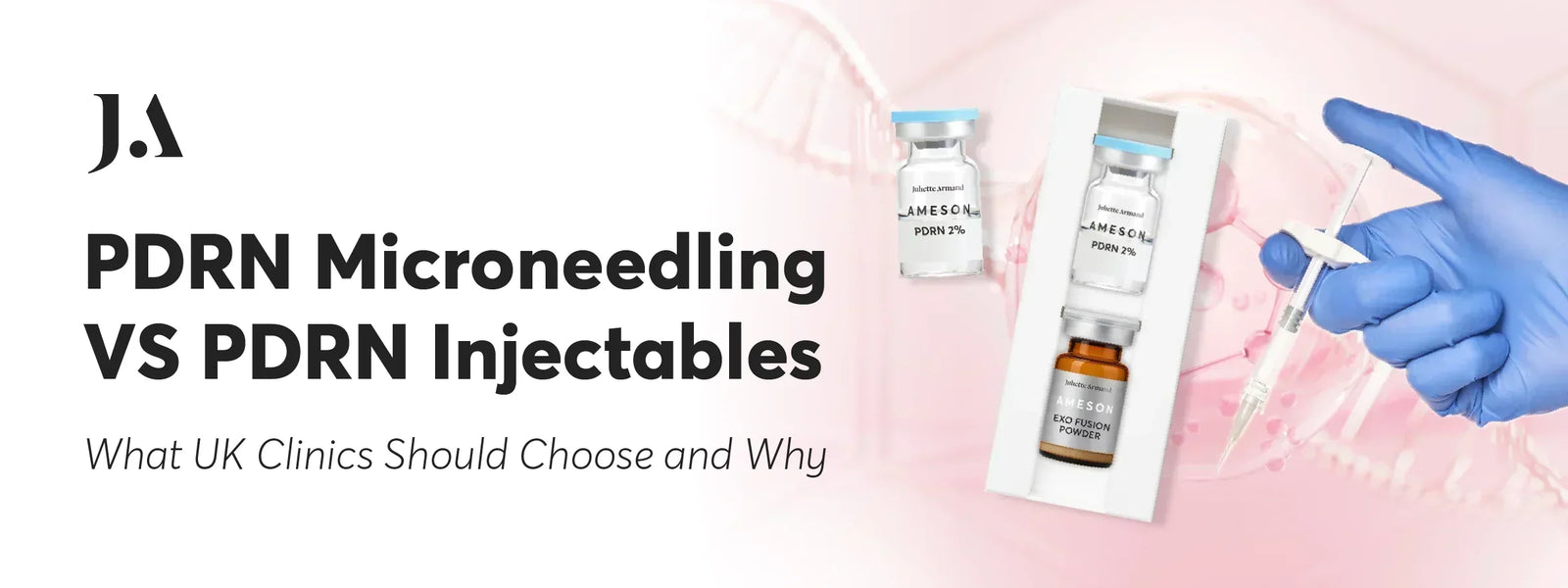
PDRN 2%
Professional PDRN 2% (PolyDeoxyRiboNucleotide) solution formulated for skin rejuvenation and suitable for application with microneedling.
Supplied as 5 x 5ml vials and indicated for concerns such as fine lines and wrinkles, scars and marks, sagging skin, pigmentation, photoageing, volume loss, and deeper expression lines.

Exo Fusion + PDRN 2%
Exo Fusion Powder + PDRN 2% is a professional regeneration set combining a lyophilised Exo Fusion Powder (110mg) with PDRN 2% (5ml) to support enhanced skin tissue renewal.
It pairs Centella Asiatica exosomes and Lactobacillus exosomes with low molecular weight hyaluronic acid and PDRN polynucleotides to help promote visible regeneration, hydration, firmness, radiance, and anti-inflammatory support.
Suitable for treatment areas including face and décolletage, and indicated for skin ageing, fine lines and wrinkles, scars and marks, and loss of skin volume.
Why The Microneedling Pathway Often Wins Commercially
-
Easier entry point for non-injecting clinics
-
Broader candidate pool
-
Course-based revenue model (predictable rebooking)
-
Lower complication burden compared to injectables (which can affect insurer loadings)
Why The Injectable Pathway Can Still Be A Strong Add-On
-
Higher per-session pricing potential
-
Strong “medical-grade” perception for some audiences
-
Fewer sessions in some protocols (depending on product choice and clinic positioning)
What to Choose: PDRN Microneedling vs PDRN Injectables?
Choose PDRN Microneedling If:
-
You want a scalable regenerative treatment with structured endpoints
-
You operate a device-led clinic model and want repeatability
-
You want a predictable downtime window (often around 4 to 5 days of recovery)
-
You are treating broader skin quality across larger areas rather than focal correction
Choose PDRN Injectable if:
-
You already operate as an injectable clinic with governance in place
-
You need precise tissue plane targeting
-
You have prescriber pathways confirmed (where applicable)
-
You accept the higher bruising likelihood and the responsibility of vascular risk management
Conclusion
From a regenerative biology standpoint, both routes aim to stimulate dermal repair, but they do it via different access paths:
-
Microneedling: mechanical collagen induction plus transdermal infusion
-
Injectables: direct tissue biostimulation via anatomical placement
For many UK clinics, starting with a protocol-driven PDRN microneedling approach offers a lower-risk, highly commercial, evidence-aligned entry into regenerative skin quality treatments.
Injectables are best introduced once governance, competence, and insurer alignment are fully secured, and you can confidently support both outcomes and complication readiness.