Can Microneedling Help Rosacea? What Clinics Need To Know

Microneedling can be helpful for some people with rosacea-prone skin, but it is not a universal rosacea treatment and it is not suitable during active inflammatory flare-ups. For clients, the most important point is to understand that rosacea needs a careful, personalised approach. For clinics, the safest approach is a strict screening process, conservative treatment settings, and clear “do not treat” rules.
With imedpen® microneedling, the goal is not to aggressively resurface the skin. The treatment creates controlled microchannels in the skin to stimulate a natural repair response and support collagen and elastin activity. This can help improve skin quality, texture, hydration, and resilience when the client is properly selected.
This guide explains when microneedling may be appropriate for rosacea-prone skin, when it should be avoided, and how both clients and clinics can approach treatment safely.
What Rosacea Looks Like
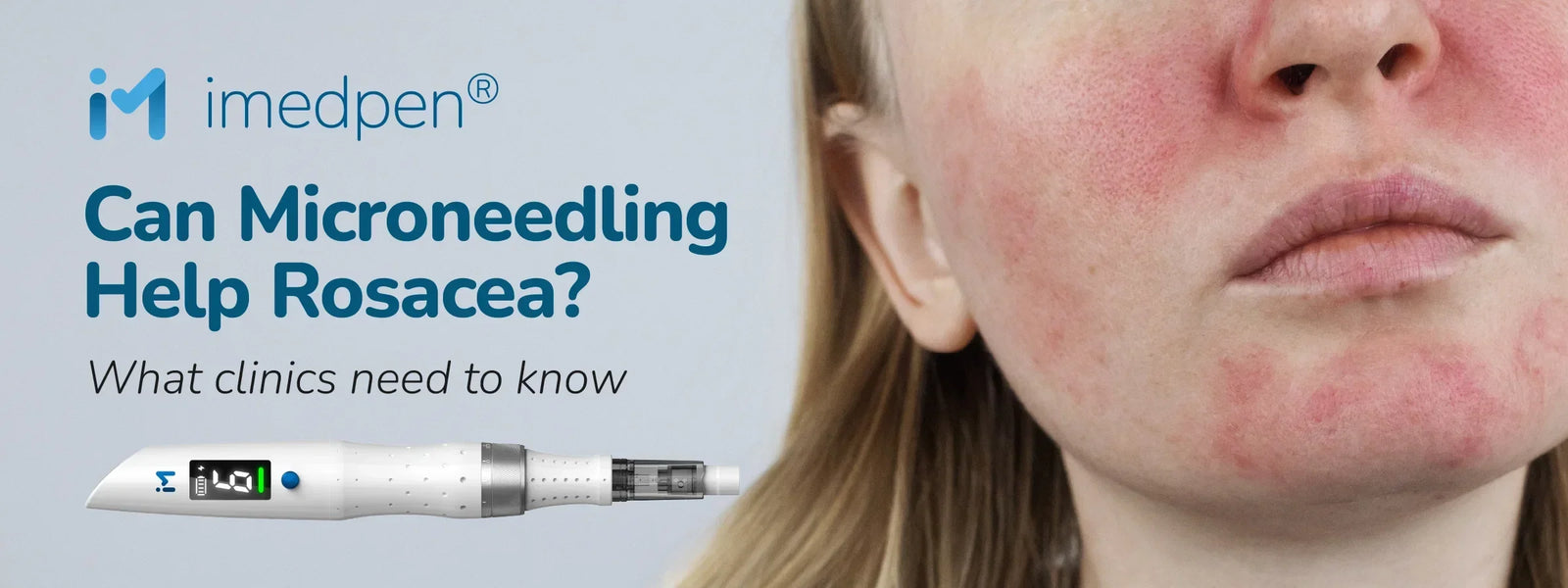
Rosacea is a chronic inflammatory skin condition that typically affects the central face. It may involve flushing, persistent redness, visible capillaries, heat sensitivity, and skin that reacts easily to products, weather, stress, alcohol, or spicy foods.
 In practice, clinics usually see three common patterns:
-
Persistent redness with visible capillaries
-
Redness plus bumps and pustules that can be mistaken for acne
-
Thickened skin texture, often around the nose
For clients, this means rosacea is not simply “sensitive skin”. It is a condition that can flare and settle over time. For professionals, it means treatment should be planned around the client’s current skin state, not just their long-term skin goals.
The key point is that rosacea is reactive. Heat, friction, harsh skincare, sun exposure, and over-treatment can all contribute to flare patterns. That matters because microneedling is a controlled injury, and reactive skin needs a more conservative plan.
When Microneedling May Be Appropriate For Rosacea
Microneedling may be considered when the client’s rosacea is stable, not actively inflamed, and the treatment aim is realistic.
For clients, this means microneedling may be suitable if your skin is calm, your barrier is not compromised, and your practitioner believes the treatment can be carried out safely. It should not be booked during a flare-up or when the skin feels hot, sore, swollen, broken, or unusually reactive.
For clinics, microneedling may be considered when:
-
The client’s rosacea is stable and not flaring
-
The barrier is supported and the client can follow aftercare properly
-
There are no active pustules, infection, open lesions, or severe irritation
-
The treatment goal is improving skin quality, texture, hydration, and resilience
-
The client understands that microneedling is not a cure for rosacea
A sensible way to position the treatment is this: microneedling may support rosacea-prone skin when the client is stable and properly selected, but vascular redness and visible thread veins may require other treatment options.
The imedpen® rosacea and sensitivity guidance refers to persistent facial erythema and visible capillaries, especially around the nose and cheeks. It also notes that rosacea-prone skin can be thinner and more prone to bleeding at superficial depths, so treatment depth must be adjusted carefully.
When Clinics Should Not Treat Rosacea
Microneedling should not go ahead if the skin is actively inflamed or if there are signs that treatment could make the skin worse.
 Do not proceed if the client has:
-
Active infection
-
Open lesions or broken skin
-
Suspicious lesions
-
Active inflammatory rosacea with pustules or significant irritation
-
Severe rosacea variants outside standard cosmetic practice
-
Skin that is hot, swollen, painful, or unusually reactive on the day
For clients, this is why a consultation is so important. A good practitioner should be willing to postpone treatment if your skin is not suitable on the day.
For professionals, active papulopustular rosacea is listed in imedpen® consultation screening, alongside other active skin conditions such as acne vulgaris stage III-IV, herpes simplex, warts, bacterial or fungal infections, solar keratosis, open lesions, and skin cancer.
If you are unsure whether the presentation is rosacea, acne, perioral dermatitis, eczema, dermatitis, or another medical skin concern, postpone treatment and recommend medical diagnosis. This is safer for the client and safer for the clinic.
A Practical Clinic Screening Checklist
Before the first session, the practitioner should complete a full consultation and skin assessment. This protects the client, improves treatment planning, and helps set realistic expectations.
Use this checklist before booking the first treatment:
-
Confirm the client’s diagnosis and current management plan
-
Ask what triggers their flares and how frequently they flare
-
Check for active bumps, pustules, broken skin, cold sores, or infection
-
Review medications and supplements
-
Ask about blood thinners, photosensitisers, isotretinoin, and recent antibiotics
-
Review topical actives, especially retinoids, AHAs, BHAs, benzoyl peroxide, hydroquinone, kojic acid, and azelaic acid
-
Check recent treatments such as peels, laser, IPL, injectables, waxing, threading, or microdermabrasion
-
Assess Fitzpatrick skin type and pigmentation risk
-
Assess the client’s ability to follow aftercare, including SPF compliance
-
Photograph baseline redness and document expectations
If the client is inflamed on the day, treat that appointment as a consultation and reschedule.
For clients, this is not a sign that treatment has been refused. It is a sign that the practitioner is protecting your skin.
Treatment Approach For Rosacea-Prone Skin
For rosacea-prone skin, conservative control matters more than intensity.
The treatment should be adapted to the client’s skin on the day. A good rosacea-prone microneedling plan should focus on controlled stimulation, hydration support, and reducing flare risk.
For professionals, this means using appropriate needle depth, suitable glide or mesotherapy products, careful zone-by-zone assessment, and clear post-treatment instructions. For clients, this means your practitioner should explain why they are taking a cautious approach.
Set A Clear Clinical Endpoint
A cautious endpoint for many rosacea-prone clients is to avoid over-treatment and aim for a controlled skin response. More intensity does not always mean better results.
If the skin shows unexpected bleeding at very superficial depths, that is a sign to reduce depth and reassess. Rosacea-prone areas may respond faster than other skin types, especially around the nose, cheeks, and peri-orbital region.
For clients, mild redness after treatment can be expected, but excessive heat, discomfort, or prolonged inflammation should be taken seriously and reported to the clinic.
Use Longer Intervals
Rosacea-prone clients usually benefit from longer spacing between sessions. This gives the skin enough time to settle and helps reduce irritation between treatments.
A conservative interval is typically several weeks rather than very frequent sessions. The imedpen® rosacea and sensitivity protocol refers to 6 to 8 week intervals for this concern, with a course approach and maintenance where appropriate.
For clients, this means you should not rush the process. For clinics, it means avoiding aggressive course scheduling that could compromise the skin barrier.
Adjust Depth By Facial Zone
Rosacea-prone areas often respond differently. The nose, cheeks, peri-orbital area, and peri-oral area may need a more cautious approach than other zones.
The nose and peri-orbital area typically require conservative settings. Cheeks and jawline may tolerate slightly more depth, but this depends on skin thickness, sensitivity, vascular response, and the client’s history.
Always treat the individual, not the chart.
Pre-Care And Aftercare That Reduces Flare Risk
For rosacea-prone skin, much of the result is created outside the treatment room. Good preparation and aftercare can make the difference between a calm recovery and an avoidable flare.
Pre-Care
Before treatment, clients should keep skincare simple and barrier-focused. Avoid harsh exfoliants, strong retinoids, scrubs, and anything that causes stinging or flushing.
Clients should also avoid sun exposure, tanning, heavy exercise, overheating, and alcohol close to treatment day where possible.
For clinics, pre-care should be written, clear, and recorded. The client should understand what to stop, when to stop it, and what to do if the skin flares before the appointment.
Aftercare
After treatment, the skin should be kept calm, clean, hydrated, and protected.
For the first few days, clients should avoid:
-
UV exposure and sunbeds
-
Intensive exercise
-
Hot showers, saunas, spas, and overheating
-
Makeup for at least 24 hours, or longer if advised
-
Swimming pools and the sea
-
Spray tanning or self-tanning
-
Further clinical treatments
-
Strong actives such as retinoids, AHAs, BHAs, benzoyl peroxide, hydroquinone, alcohol-based products, and chemical-based sunscreens
The imedpen® post-procedural guidance also advises that skin may feel dry and tight for the first 1 to 3 days, and that post-session topicals and practitioner-prescribed skincare can help soothe, calm, and protect the skin.
For rosacea-prone clients, aftercare should be minimal and calming. This usually means a gentle cleanser, hydration support, barrier-focused products, and SPF as advised by the practitioner.
What To Tell Clients So Expectations Stay Realistic
Clients often ask, “Will microneedling cure my rosacea?”
The safest answer is no.
Better phrasing is:
“Microneedling can support skin quality, hydration, texture, and resilience in stable rosacea-prone skin.”
“Microneedling is not suitable during an active flare.”
“Redness and visible vessels may need a separate treatment plan.”
“Our priority is to keep your skin calm, reduce flare risk, and build your treatment gradually.”
This keeps the conversation honest. It also helps clients understand why a conservative treatment may be more appropriate than an aggressive one.
Product Recommendations For Rosacea-Prone Microneedling Protocols
Product choice matters when treating rosacea-prone or reactive skin. The aim should be to support hydration, barrier comfort, recovery, and skin resilience without relying on aggressive exfoliation.
The following professional-use options can be considered as part of a clinic-led imedpen® microneedling plan, depending on the client’s skin condition, suitability, and treatment objective.
PDRN 2%
PDRN 2% is a professional product containing PDRN, or PolyDeoxyRiboNucleotide, at a 2% concentration. useful for skin rejuvenation and indicates it for concerns such as expression lines, deep wrinkles, scars and marks, loose skin, volume loss, and photoageing. It is also described as suitable for application with microneedling technique.
For rosacea-prone skin, PDRN 2% is best positioned as a recovery-support and regeneration-focused option. It may be considered when the treatment goal is to support skin repair, improve post-treatment recovery, enhance hydration, and encourage collagen activity without relying on aggressive exfoliation.
 Best for:
-
Skin repair and regeneration support
-
Inflammation recovery support
-
Hydration-focused rejuvenation
-
Collagen stimulation without aggressive exfoliation
-
Clients who need a regenerative rather than resurfacing-led approach
Exo Fusion Powder + Hyal 2%
Exo Fusion Powder + Hyal 2% combines Exo Fusion Powder with Hyal 2%. The product contain Centella asiatica and Lactobacillus exosomes with hyaluronic acid, designed to support skin tissue renewal, hydration, tightening, radiance, collagen and elastin stimulation, and anti-inflammatory action.
For rosacea-prone or sensitised skin, this makes it a strong option when the skin needs hydration, barrier support, and recovery support in one professional protocol. It is particularly relevant for clients who are dehydrated, reactive, or showing signs of impaired skin comfort. Best for:
-
Sensitised skin
-
Dehydration
-
Barrier repair support
-
Inflammation support
-
Clients needing hydration and recovery support
Hyal 2%
Hyal 2% contains low molecular weight hyaluronic acid at a 2% concentration for transdermal application. This helps increase the skin’s water reserves, reduce the appearance of wrinkles, and provide radiance to the skin. It is listed for dry or dehydrated skin, fine lines and wrinkles, sagging skin, dull skin, and skin ageing.
For rosacea-prone skin, Hyal 2% is the most hydration-focused option. Dehydration is common in reactive skin, and a hydration-led approach can help support comfort and resilience without introducing unnecessary irritation.
 Best for:
-
Dry or dehydrated skin
-
Rosacea-prone clients who need hydration support
-
Skin resilience support
-
Clients who are not ready for stronger active-led protocols
-
Conservative microneedling plans where hydration is the priority
Clinic Governance For Rosacea Treatments
To protect the client and your business, rosacea treatments should be properly documented from consultation through to aftercare.
Clinics should record:
-
Skin history and current rosacea status
-
Contraindications and treatment considerations
-
Medication and topical skincare review
-
Client triggers and flare history
-
Baseline photographs
-
Treatment area and settings used
-
Needle depth by facial zone
-
Product, glide, or mesotherapy solution used
-
Immediate skin response
-
Aftercare given
-
Follow-up advice
For clients, this means your clinic should be able to explain what was used, why it was chosen, and what you should do after treatment.
For professionals, this documentation matters if a client flares after treatment. Your records should show that you screened properly, treated conservatively, gave clear aftercare, and acted within your training and protocol.
FAQs
Can Microneedling Make Rosacea Worse?
Yes. Microneedling can make rosacea worse if the client is treated during an active flare, if the settings are too aggressive, if unsuitable products are used, or if aftercare is poor.
This is why proper consultation, conservative settings, and clear aftercare are essential.
Is Microneedling Better Than IPL For Rosacea?
Microneedling and IPL usually address different goals.
IPL and vascular laser treatments are commonly used for redness and visible vessels,while. Microneedling is usually chosen for skin quality, texture, hydration, and collagen support.
Some clients may benefit from a staged approach, but this should be decided by a qualified practitioner after consultation.
How Many Sessions Do Rosacea Clients Usually Need?
A course approach is common, followed by maintenance if appropriate. The number of sessions depends on the client’s skin stability, treatment goals, tolerance, and recovery.
Rosacea-prone clients generally need a slower, more conservative plan than clients with less reactive skin.
Is Microneedling Safe For Sensitive Skin?
Microneedling may be suitable for some sensitive or rosacea-prone clients, but only when the skin is stable and properly assessed. It should not be carried out on broken, infected, severely irritated, or actively inflamed skin.
What Should Clients Avoid After Microneedling?
Clients should avoid UV exposure, intensive exercise, hot showers, saunas, swimming, makeup for the advised period, tanning, further clinical treatments, and strong active skincare until the skin has recovered.
Which Products Are Best After Microneedling For Rosacea-Prone Skin?
For rosacea-prone skin, the best product choices are usually hydrating, calming, and barrier-supportive. Depending on the client’s skin and the clinic protocol, options such as PDRN 2%, Exo Fusion Powder + Hyal 2%, and Hyal 2% may be considered for professional microneedling support.
Conclusion
Microneedling can support some people with rosacea-prone skin, but it must be approached carefully. It is not a cure for rosacea, and it should not be performed during active inflammatory flare-ups.
For clients, the safest route is to choose a trained practitioner who will assess your skin properly, explain whether treatment is suitable, and give clear aftercare. For clinics, the safest route is to screen thoroughly, treat conservatively, document properly, and choose products that support hydration, repair, and skin resilience.
With the right client selection and a careful imedpen® protocol, microneedling can be a useful option for improving skin quality in stable rosacea-prone skin.