Rosacea And The Skin Barrier: Why Repairing The Skin Is Key To Healthier Skin

If you have rosacea, your skin often is not just “red”. It is frequently reactive because the outer protective layer of the skin, your skin barrier, is under strain. When the barrier is compromised, your skin loses water more easily, stings more readily, and becomes more sensitive to everyday triggers like hot water, weather changes, stress, and skincare that used to be fine.
The fastest way to get rosacea-prone skin to look and feel healthier is usually not adding stronger actives. It is rebuilding the barrier so your skin can calm down and tolerate a simple routine consistently.
For clinics and skincare professionals, this is also an important point to communicate during consultations. Many clients with rosacea-prone or redness-prone skin are looking for fast results, but their skin may first need a period of barrier repair before stronger actives, peels, and professional microneedling treatments are considered.
What Is The Skin Barrier?
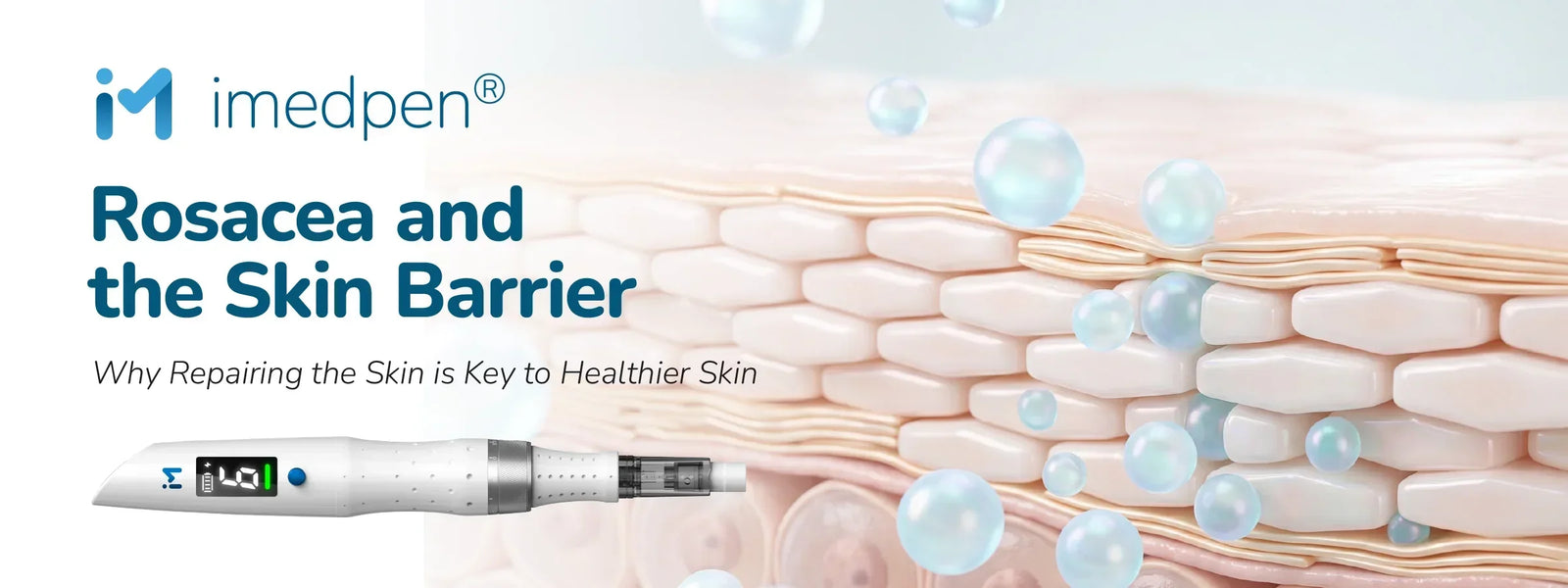
Your skin barrier is mainly the outermost layer of skin. Think of it like a protective shield that:
-
Keeps hydration in
-
Keeps irritants and allergens out
-
Helps your skin stay comfortable and resilient
When it is working well, your skin feels flexible, not tight, and products do not sting on contact.

A healthy skin barrier also helps maintain a more stable skin environment. This matters for rosacea because reactive skin is often less tolerant of friction, heat, fragrance, harsh cleansing, over-exfoliation, and sudden routine changes.
How Rosacea Links To Barrier Disruption
Rosacea-prone skin often behaves like it has a weaker barrier on the face. That can show up as:
-
Burning or stinging with basic skincare
-
Tightness after cleansing
-
Flaking patches that come and go
-
Sensitivity to temperature changes
-
Redness that feels angry rather than just flushed
This is why barrier repair matters. When you reduce water loss and irritation, you can reduce the day-to-day reactivity that keeps rosacea stuck in a cycle.
For clients, this can feel frustrating because the skin may react even when they are using products that are marketed as gentle. For professionals, it is a sign that the routine may need to be simplified before introducing more targeted corrective ingredients.
Signs Your Barrier Needs Repair
 You do not need a lab test. Look for patterns like:
-
Your cleanser suddenly feels harsh
-
Moisturiser stings for more than a few seconds
-
Your skin looks shiny but feels tight
-
Redness worsens after washing
-
Makeup sits badly because of dehydration and texture
If you recognise several of these, go barrier-first for a few weeks before judging whether other products are working.
A damaged barrier can make almost every product feel like the wrong product. This is why changing multiple products at once often makes rosacea-prone skin more confused, not calmer. A short reset phase can make it easier to understand what your skin truly tolerates.
The Barrier First Rosacea Routine
This is a practical routine you can use as a baseline. The goal is comfort and consistency.
Morning Routine
 Cleanse lightly
If your skin is not oily, you may only need a splash of lukewarm water.
If you do cleanse, choose a gentle, non-stripping cleanser. Avoid foaming cleansers that leave the skin tight, squeaky, or dry.
Moisturise
Apply a simple moisturiser while the skin is slightly damp. This helps reduce tightness and supports hydration.
Daily SPF
Use an SPF you tolerate well, every day. UV exposure is a common rosacea trigger and barrier stressor, so sun protection is not optional if redness and sensitivity are a concern.
Evening Routine
 Gentle cleanse
Remove SPF and makeup without scrubbing. Use lukewarm water and avoid rough clothes, cleansing brushes, or repeated cleansing.
Moisturise generously
This is where barrier repair happens. Use enough product to feel comfortable, not tight.
Optional calming layer
If your skin tolerates it, a simple hydrating or calming serum can be helpful. If you are very reactive, keep it minimal and introduce one product at a time.
For clinics, this routine can also work as a simple pre-treatment baseline. If a client cannot tolerate cleansing, moisturiser, and SPF, they may not yet be ready for more active-led treatment plans.
Ingredients To Prioritise If You Have Rosacea
 Look for barrier-supportive, low-irritant ingredients:
-
Glycerin for hydration
-
Ceramides and other skin-identical lipids for barrier support
-
Gentle humectants like hyaluronic acid if you tolerate them
-
Soothing ingredients such as panthenol and niacinamide in low to moderate strengths, if tolerated
Start with fewer ingredients and build up. With rosacea, simpler often works better.
Ceramides are especially useful when the skin feels dry, tight, or easily irritated because they help support the lipid structure of the barrier. Niacinamide can also be helpful for redness-prone and sensitive skin, but very reactive skins should still introduce it slowly. Panthenol, aloe vera, and calming moisturising ingredients can help make the skin feel more comfortable while the barrier is recovering.
Product Recommendations For Rosacea And Skin Barrier Support
When choosing products for rosacea-prone skin, the aim should be to support the barrier, calm visible irritation, and reduce the chance of further disruption. The routine does not need to be complicated. A gentle cleanser, a barrier-supporting serum, a calming moisturiser, and daily SPF is usually a stronger starting point than layering too many actives.
Below are suitable product options from IvanMed for a barrier-first rosacea routine.
Sensitive Cleansing Gel
 Sensitive Cleansing Gel is a gentle cleansing option for skin that feels tight, reactive, or easily irritated. It is formulated specifically for sensitive skin and helps cleanse without leaving the skin feeling stripped.
For rosacea-prone skin, cleansing is often where irritation begins. A harsh cleanser can increase tightness, dryness, and redness after washing. Sensitive Cleansing Gel helps keep the routine simple by removing daily impurities while supporting comfort and helping maintain lipid balance.
Best suited for:
-
Sensitive skin
-
Dry or dehydrated skin
-
Irritated skin
-
Clients who feel tightness after cleansing
-
Preventing barrier disruption caused by harsh cleansing
-
A barrier repair phase where strong exfoliating cleansers should be avoided
Cera Shield Serum
 Cera Shield Serum is the key recommendation when the main concern is a compromised skin barrier. It is specifically designed for compromised skin barriers and contains five ceramides, cholesterol, Vitamin D3 and peptides.
This is the product to consider when the skin needs more than basic hydration. It supports the structure of the barrier itself, which is important when redness, tightness, dehydration and irritation are being driven by barrier weakness. It also supports microbiome balance, making it a strong option for reactive and easily stressed skin.
Best suited for:
-
Compromised skin barrier
-
Redness-prone and irritated skin
-
Tightness and dehydration
-
Skin that struggles to tolerate active ingredients
-
Supporting microbiome balance
-
Barrier support before or after professional treatments, where appropriate
Vitamin B Complex Serum
 Vitamin B Complex Serum is a calming serum for irritated, sensitive and redness-prone skin. It helps hydrate without a heavy finish, making it a useful option when the skin needs comfort, moisture support and a lighter serum layer.
For rosacea-prone skin, Vitamin B Complex Serum can be considered when the goal is to support skin resilience, reduce sensitivity triggers, and help calm the look of erythema and irritation. It is also useful when the skin feels inflamed but does not tolerate richer or heavier products well.
Best suited for:
-
Redness-prone skin
-
Irritated or sensitive skin
-
Dry or dehydrated skin
-
Erythema and visible irritation
-
Supporting skin resilience
-
Reducing sensitivity triggers
-
Clients who want a lighter calming serum layer
Hydra Calming Cream
 Hydra Calming Cream is a soothing moisturising cream designed for sensitive and irritated skin. It is a good moisturiser choice when rosacea-prone skin feels uncomfortable, dry, reactive, or inflamed.
It can be used as the moisturising step in a barrier-first routine, especially when the skin needs comfort and protection rather than strong active ingredients. Its calming and anti-inflammatory positioning makes it suitable for skin that is prone to redness, irritation and sensitivity.
Best suited for:
-
Sensitive skin
-
Irritated skin
-
Dry or dehydrated skin
-
Redness and discomfort
-
Skin that needs soothing moisturisation
-
Barrier repair routines where the skin needs a calming cream
Simple Routine Example
Morning:
-
Cleanse lightly with Sensitive Cleansing Gel, or rinse with lukewarm water if the skin is very reactive
-
Apply Cera Shield Serum or Vitamin B Complex Serum
-
Apply Hydra Calming Cream
-
Finish with a tolerated SPF
Evening:
-
Cleanse gently with Sensitive Cleansing Gel
-
Apply Cera Shield Serum for barrier support
-
Apply Hydra Calming Cream to seal in comfort
For very reactive skin, start with cleanser, moisturiser, and SPF only. Once the skin feels calmer, introduce one serum at a time and monitor for stinging, heat, or prolonged redness.
For clinics, these products can also be positioned as part of a skin preparation and recovery plan for suitable clients. The focus should be on improving tolerance, reducing visible irritation, and helping the client maintain a consistent homecare routine.
What To Avoid During A Barrier Repair Phase
 For 2 to 6 weeks, consider pausing:
-
Scrubs and cleansing brushes
-
Strong acids and frequent exfoliation
-
High-strength retinoids if you are already irritated
-
Very hot water, saunas, and harsh temperature changes
-
Fragranced products if you are prone to stinging
This is not forever. It is a reset so your skin can recover.
During this phase, avoid judging your skin too quickly. Barrier repair takes consistency. The goal is not to make the skin perfect overnight, but to reduce the feeling of constant reactivity.
How To Reintroduce Actives Without Triggering A Flare-Up
 If you want to use actives for pigmentation, texture, or ageing, use this approach:
-
Add only one active at a time
-
Start once a week, not every night
-
Buffer with moisturiser if needed
-
Keep the rest of the routine stable
-
If stinging or redness increases for several days, stop and reset
The goal is progress without inflammation.
For rosacea-prone skin, actives should be introduced around the skin’s tolerance, not around a generic routine. A product that works well for one person may be too much for another if the barrier is impaired.
Professional Treatments And Rosacea
If you are considering professional treatments, start by getting your baseline calm. A good clinic will ask about:
-
Your rosacea subtype and flare patterns
-
Your current routine and sensitivities
-
Any medications and contraindications
-
Your aftercare plan, including barrier support and SPF
For clinics offering microneedling, rosacea requires careful suitability screening. Professional protocols may consider microneedling for certain rosacea types, while advising against treating specific severe presentations and recommending additional experience for more complex cases. Always follow device guidance, training standards, and consultation protocols.
Barrier repair is also important before professional treatments because reactive skin may be more likely to flare when it is already inflamed, dehydrated, or over-exfoliated. A calm baseline gives both the client and practitioner a clearer starting point.
What Improvement Looks Like
Barrier repair is not instant, but it is measurable. You may notice:
-
Less stinging with products
-
Skin feels comfortable after cleansing
-
Fewer rough patches and less flaking
-
Redness looks less inflamed
-
Better tolerance of SPF and moisturiser
Once you have that stability, you can decide what to treat next, and do it more safely.
For clinics, improvement may also show up as better treatment compliance. When clients feel less discomfort and understand why they are using a simple routine, they are more likely to stay consistent with homecare.
FAQ
Should I stop everything and go minimalist?
If you are stinging and inflamed, yes. A gentle cleanse, moisturiser, and SPF is often the best short-term plan. Once your skin feels calmer, you can slowly reintroduce supportive serums or targeted products.
Does oily skin still need barrier repair?
Yes. Dehydration can drive compensatory oil, and oily skin can still be barrier-impaired. If your skin is oily but tight, shiny but dehydrated, or stings after cleansing, your barrier may still need support.
What is the best skincare routine for rosacea and a damaged skin barrier?
Start with a gentle cleanser, a barrier-supporting serum, a calming moisturiser, and SPF in the morning. Avoid strong exfoliants, scrubs, fragrance-heavy products, and frequent active use until the skin feels more stable.
Are ceramides good for rosacea-prone skin?
Ceramides can be helpful because they support the skin’s natural lipid barrier. This is important for rosacea-prone skin that feels dry, tight, irritated, or easily reactive.
Can niacinamide help redness-prone skin?
Niacinamide can support the skin barrier and may help redness-prone skin look calmer, but tolerance matters. If your skin is very reactive, introduce it slowly and avoid layering it with too many other actives at the same time.
How long does skin barrier repair take?
Many people notice early comfort improvements within a few weeks, but this depends on how irritated the skin is, what triggered the barrier disruption, and how consistent the routine is. A realistic barrier repair phase is usually 2 to 6 weeks.
Can I use actives if I have rosacea?
You may be able to use actives, but timing and tolerance are important. If your skin is stinging, tight, hot, or visibly irritated, focus on barrier repair first. Once your skin feels calmer, introduce one active at a time and keep the rest of your routine simple.
Should clinics recommend barrier repair before treating rosacea-prone skin?
Yes, in many cases. If the client’s skin is reactive, dehydrated, inflamed, or easily irritated, barrier support should come before aggressive active-led routines or professional treatments. A stable skin barrier can improve comfort, tolerance and treatment planning.
When should I see a GP or dermatologist?
If you have persistent burning, swelling, eye symptoms, worsening rash, or you suspect allergy or dermatitis, seek medical advice. Rosacea can overlap with other skin conditions, so persistent or severe symptoms should be assessed properly.
Conclusion
Rosacea-prone skin is often reactive because the skin barrier is under pressure. Instead of immediately reaching for stronger actives, the smarter first step is to calm the skin, reduce irritation, and rebuild tolerance with a simple barrier-first routine.
For home users, this means gentle cleansing, consistent moisturising, daily SPF, and carefully chosen calming products. For clinics, it means assessing the client’s baseline skin health before recommending advanced treatments or active-led routines.
When the barrier is stronger, the skin is usually more comfortable, less reactive, and better able to tolerate the next stage of a skincare or treatment plan. Any help? Talk to our team.