Rosacea vs Sensitive Skin: How To Tell the Difference and Choose the Right Skincare
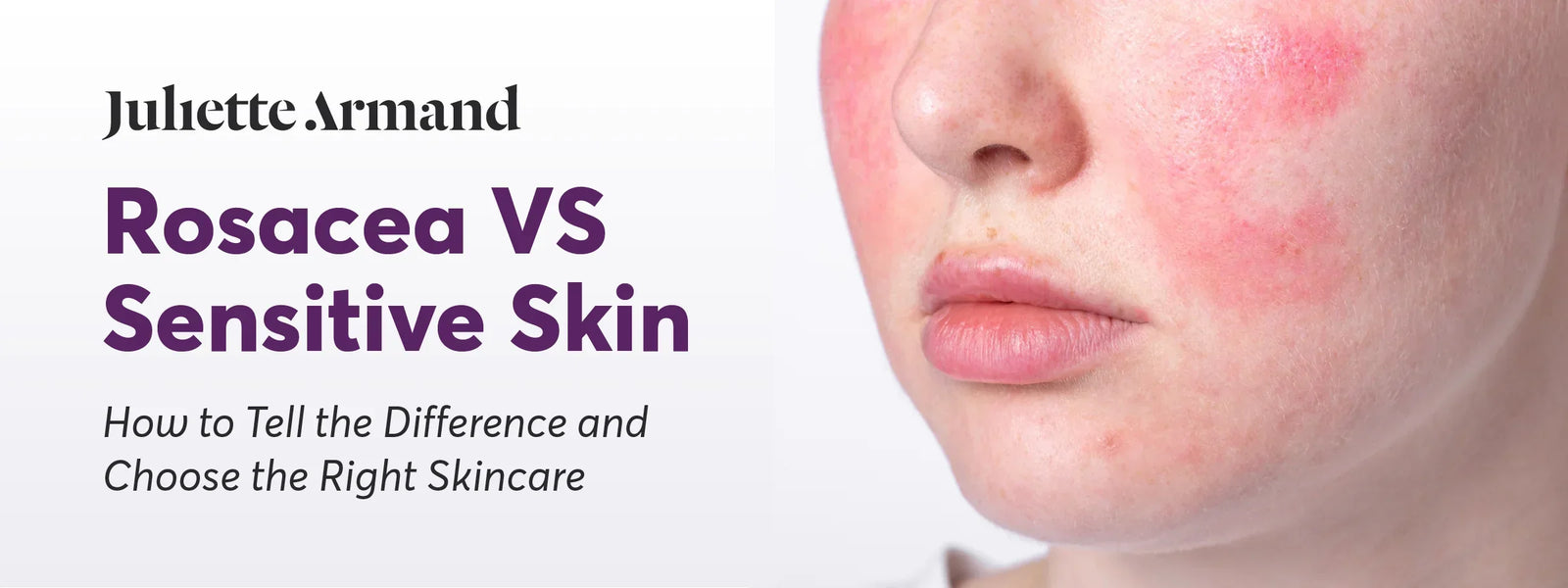

Understanding the difference between rosacea and sensitive skin is essential if you are dealing with ongoing redness, irritation, or reactivity. While they can appear similar on the surface, rosacea and sensitive skin have different causes, patterns, and treatment approaches, which is why choosing the right skincare starts with identifying which one you are experiencing.
Rosacea is a chronic inflammatory skin condition that usually affects the central face and follows a recognisable pattern of flushing, persistent redness, visible blood vessels, and sometimes acne-like bumps without blackheads.
Sensitive skin is not a medical condition. It is a skin state where the barrier is compromised, leading to irritation, dryness, and reactivity to products, environment, or lifestyle triggers. It can exist on its own or alongside conditions such as rosacea, eczema, or dermatitis.
What Is Rosacea vs Sensitive Skin?
What Is Rosacea?
Rosacea is a long-term inflammatory condition that primarily affects the cheeks, nose, chin, and forehead. It tends to progress over time if not managed correctly and is often triggered by internal and external factors.
Typical characteristics include:
-
Persistent facial redness
-
Flushing episodes that come and go
-
Visible capillaries or thread veins
-
Acne-like bumps without comedones
-
Skin that feels hot, burning, or stinging
-
Possible eye involvement such as dryness or irritation
From a clinical perspective, rosacea is considered a vascular and inflammatory disorder, not simply “sensitive skin”.
What Is Sensitive Skin?
Sensitive skin refers to a reactive skin condition rather than a diagnosis. It is usually linked to a weakened or disrupted skin barrier.
Common features include:
-
Tightness and dryness
-
Redness after product use
-
Stinging or burning sensation
-
Increased reactivity to skincare, weather, or stress
-
Symptoms that improve when triggers are removed
Sensitive skin is often temporary and can be improved significantly with the correct skincare approach.
Differences Between Rosacea and Sensitive Skin
The difference between rosacea and sensitive skin is that rosacea is a chronic condition, while sensitive skin is a temporary reactive state.
Understanding the difference between rosacea and sensitive skin is critical to choosing the right skincare products and avoiding flare-ups.
Signs That Point Towards Rosacea
-
Redness concentrated in the central face
-
Flushing triggered by heat, alcohol, spicy food, or stress
-
Visible blood vessels (telangiectasia)
-
Bumps or pustules without blackheads
-
Persistent symptoms rather than temporary reactions
-
Burning sensation even when using gentle skincare
-
Possible eye irritation
Signs That Point Towards Sensitive Skin
-
Redness triggered by new skincare products
-
Dryness, tightness, or irritation
-
Stinging when applying products or even water
-
Symptoms fluctuate depending on routine
-
Itch may be more prominent than burning
-
Skin improves when irritants are removed
Common Skin Conditions That Mimic Rosacea
Misidentification is common, especially in the UK market where many patients self-diagnose before seeking treatment.
Conditions that can look similar include:
-
Irritant contact dermatitis
-
Allergic contact dermatitis
-
Eczema
-
Perioral dermatitis
-
Acne
This is why a structured self-check and conservative skincare approach is essential before introducing actives.
At-Home Self-Check: How To Identify Your Skin Type
 Use this simple decision framework:
-
Where is the redness located? Central facial redness suggests rosacea
-
Do you flush easily? Triggers like heat, alcohol, and exercise suggest rosacea
-
Do products sting consistently? This may indicate rosacea or a compromised skin barrier
-
Do you get bumps without blackheads? This leans more towards rosacea than acne
-
Do symptoms appear after product changes? This suggests sensitive skin or dermatitis
-
Do you have eye irritation? This may indicate ocular rosacea and requires medical review
Common Triggers To Avoid For Rosacea and Sensitive Skin
Rosacea Triggers

-
Hot drinks such as tea and coffee
-
Alcohol, particularly red wine
-
Spicy foods
-
Sun exposure
-
Sudden temperature changes
-
Stress and emotional triggers
Sensitive Skin Triggers

-
Fragrance and essential oils
-
Over-exfoliation
-
Harsh cleansers
-
Strong actives such as retinoids or acids
-
Cold weather and wind exposure
Skincare Do’s and Don’ts for Redness-Prone Skin

What To Do
-
Use a gentle cleanser that does not strip the skin
-
Focus on barrier repair before introducing actives
-
Apply a moisturiser that supports hydration and lipid balance
-
Use SPF daily, ideally mineral-based
-
Introduce active ingredients slowly and strategically
What To Avoid
-
Aggressive exfoliation or scrubs
-
Using multiple actives at once
-
Fragrance-heavy formulations
-
Constantly changing skincare routines
The 14-Day Skin Reset (Recommended Approach)
If you are unsure whether you are dealing with rosacea or sensitive skin, the safest starting point is a reset protocol.
For the next 14 days:
-
Cleanse gently once daily or rinse with lukewarm water in the morning
-
Use a barrier-repair moisturiser
-
Apply a non-irritating SPF every day
-
Avoid all actives including acids, retinoids, and exfoliants
This approach mirrors post-treatment care principles, where active ingredients are paused to allow the skin to recover and reduce irritation risk.
Ingredient Guide For Rosacea and Sensitive Skin: What Works and Why
Best Ingredients for Rosacea
Azelaic Acid
Helps reduce inflammation, redness, and bacterial activity
Niacinamide
Strengthens the skin barrier and reduces redness
Zinc Oxide
Provides essential UV protection without irritation
Centella Asiatica
Supports healing and reduces inflammation
Best Ingredients for Sensitive Skin
Niacinamide
Improves barrier function and reduces irritation
Ceramides
Restore lipid balance and strengthen the barrier
Hyaluronic Acid
Delivers hydration without triggering sensitivity
Panthenol
Calms irritation and supports skin repair
Product Recommendations From Juliette Armand
For Rosacea-Prone Skin

Azelaic 17% - Mandelic 17% Acid Treatment
A targeted treatment combining azelaic acid with exfoliating support to reduce redness, inflammation, and breakouts.
Vitamin B Complex Serum (Niacinamide)
Supports barrier repair while reducing redness and improving overall skin balance.
Sunfilm Face Mineral Fluid SPF50 (Zinc Oxide)
A mineral SPF designed to protect sensitive and rosacea-prone skin without causing irritation.
Exo Fusion Serum (Centella Asiatica)
Helps calm inflammation and supports skin recovery.
For Sensitive Skin

DNA-RNA Rejuvenation Cream (Niacinamide)
Supports skin regeneration and improves resilience against irritation.
Cera Shield Serum (Ceramides)
Replenishes essential lipids and strengthens the skin barrier.
Hydra Plumping Serum (Hyaluronic Acid)
Provides deep hydration while maintaining skin comfort.
Calming Bliss (Panthenol)
Soothes irritation and helps reduce skin sensitivity.
When To See a GP or Dermatologist in the UK
You should seek professional advice if:
-
Redness is persistent and worsening
-
You notice visible blood vessels
-
You experience eye irritation or dryness
-
Skincare changes do not improve symptoms
-
You develop painful or inflamed bumps
In the UK, clinicians may prescribe:
-
Azelaic acid
-
Ivermectin
-
Metronidazole
Practitioner Insight (Important Clinical Context)
Active rosacea, particularly papulopustular rosacea, is often a contraindication for more advanced treatments such as microneedling and must be carefully assessed before treatment planning
This reinforces the importance of stabilising the skin with appropriate homecare before introducing professional procedures.
Frequently Asked Questions (FAQ)
How do I know if I have rosacea or sensitive skin?
Look at the pattern. Persistent central redness and flushing suggest rosacea. Temporary irritation linked to products suggests sensitive skin.
Can you have both rosacea and sensitive skin?
Yes. Rosacea-prone skin is often highly reactive and behaves like sensitive skin.
Is azelaic acid good for rosacea?
Yes. It is widely recommended for reducing inflammation and redness.
Should I avoid retinoids and acids completely?
Not necessarily, but they should be avoided during flare-ups and introduced slowly once the skin is stable.
Why does my skin sting even with gentle products?
This usually indicates a compromised skin barrier or underlying inflammation.
What SPF is best for redness-prone skin?
Mineral SPF with zinc oxide is typically better tolerated.
How long does it take to repair the skin barrier?
With a consistent routine, most people see improvement within two to four weeks.
Conclusion
If your redness follows triggers and patterns, it is more likely rosacea. If it reacts to products and improves when simplified, it is likely sensitive skin.
In both cases, the strategy is the same. Calm the skin, protect the barrier, and rebuild before introducing targeted treatments.