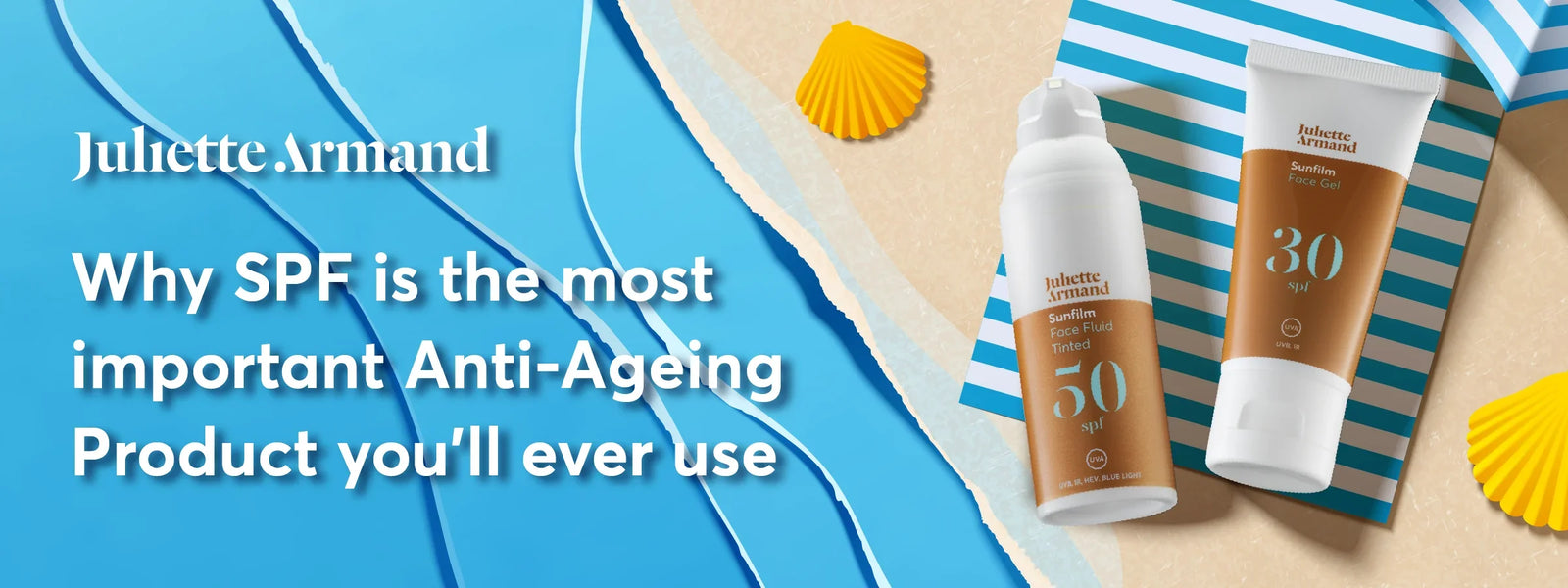
Why SPF Is the Most Important Anti-Ageing Product You’ll Ever Use

When we think about anti-ageing skincare, ingredients such as retinoids, peptides, vitamin C and hyaluronic acid often receive most of the attention. But if your goal is to maintain healthier-looking skin and reduce the development of premature signs of ageing, there is one step that should come before almost everything else: sun protection.
A well-formulated SPF does something most corrective skincare products cannot. Rather than simply targeting visible concerns after they appear, it helps protect the skin from one of the most significant external factors responsible for premature ageing: ultraviolet radiation.
Fine lines, uneven pigmentation, loss of elasticity, rough texture and changes in skin tone can all be influenced by cumulative sun exposure. That is why consistent sun protection should be considered the foundation of an effective preventative anti-ageing routine.
And yes, that still matters when you live in the UK.
What Does SPF Actually Mean?
SPF stands for Sun Protection Factor.
The number primarily indicates the tested level of protection against UVB radiation.
For example, an SPF50 product provides a higher tested level of UVB protection than SPF30 when both are applied correctly.
However, the SPF number alone does not tell you everything you need to know about a sunscreen.
For an effective anti-ageing skincare routine, look for:
-
Broad-Spectrum UVA And UVB Protection
-
An Appropriate SPF Level
-
A Texture Suitable For Your Skin Type
-
Comfortable Everyday Wear
-
Compatibility With Make-Up And Other Skincare
-
A Formula You Are Happy To Apply Consistently
That final point matters more than many people realise.
The most sophisticated sunscreen in the world cannot protect your skin while sitting unused on a bathroom shelf.
Do You Really Need SPF in the UK?
It is easy to associate sunscreen with hot weather, holidays and beach days.
But temperature and UV exposure are not the same thing.
UV radiation can still reach the skin on cooler or overcast days, and UVA exposure is not restricted to the height of summer.
That does not mean every day in Britain carries exactly the same UV risk. The UV index, time spent outdoors, season and individual circumstances all matter.
However, for anyone serious about preventing photoageing, incorporating SPF into the morning skincare routine can make consistent protection much easier.
Rather than trying to decide every morning whether your skin "needs" protection, SPF becomes a normal part of your routine alongside cleansing and moisturising.
Is SPF30 or SPF50 Better for Anti-Ageing?
Both SPF30 and SPF50 can provide high levels of protection when applied correctly.
SPF50 provides a higher tested level of UVB protection and may be particularly useful when:
-
You Spend Significant Time Outdoors
-
You Are Concerned About Hyperpigmentation
-
Your Skin Is Particularly Prone To Sun Damage
-
You Are Travelling To An Area With Higher UV Levels
-
You Have Recently Had A Professional Treatment Where Strict Sun Protection Has Been Recommended
-
You Simply Prefer A Higher Level Of Daily Protection
SPF30 can still be an effective everyday option when used appropriately and reapplied as required.
The most important factor is consistency.
An SPF50 that you dislike wearing and consequently rarely apply may be less useful in practice than an SPF30 formulation that fits comfortably into your routine every day.
Meet the Juliette Armand Sunfilm SPF Range
For everyday sun protection, the Juliette Armand Sunfilm SPF Range offers dedicated facial and body sun-protection options designed to suit different skin needs, preferences and lifestyles.
The range includes SPF30 and SPF50 options alongside tinted, non-tinted, mineral and non-mineral formulations.
This allows you to choose your SPF based not only on protection level, but also on how you prefer sunscreen to feel and look on your skin.
Depending on the individual product, the Sunfilm range includes lightweight and non-oily textures designed to make daily protection easier to incorporate into a complete skincare routine.
For anyone building an anti-ageing routine, Sunfilm should be considered the final protective step of the morning skincare routine, applied after serums and moisturising products and before make-up.
What Is Photoageing?
Skin ageing happens through a combination of intrinsic and extrinsic factors.
Intrinsic ageing refers to the natural biological changes that occur over time. These include gradual changes in collagen production, elasticity, cellular renewal and moisture levels.
Extrinsic ageing is influenced by external factors such as environmental pollution, lifestyle and, importantly, ultraviolet exposure.
The visible changes associated with repeated UV exposure are often referred to as photoageing.
These can include:
-
Fine Lines And Wrinkles
-
Uneven Skin Tone
-
Hyperpigmentation And Dark Spots
-
Dullness
-
Rougher Skin Texture
-
Loss Of Firmness And Elasticity
-
Increased Appearance Of Sun Damage
You cannot stop the natural ageing process, but protecting the skin from unnecessary UV exposure can help reduce one of the major avoidable contributors to premature visible ageing.
This is why SPF should not be treated as an optional summer product. It is an important preventative skincare step.
UVA vs UVB: Why Both Matter
Understanding the difference between UVA and UVB helps explain why choosing the right sunscreen involves more than simply looking at the SPF number.
UVA Rays
UVA rays penetrate more deeply into the skin and are strongly associated with photoageing.
Over time, repeated UVA exposure can contribute to changes in collagen and elastin, pigmentation and visible skin texture.
UVA can also penetrate through some types of glass, meaning exposure is not necessarily limited to time spent outdoors.
UVB Rays
UVB rays primarily affect the more superficial layers of the skin and are strongly associated with sunburn.
UVB intensity changes according to factors such as season, location, weather conditions and time of day.
Both UVA and UVB can affect skin health, which is why broad-spectrum sun protection is an important consideration when choosing your everyday SPF.
Why SPF Is Essential When Targeting Pigmentation
If uneven pigmentation, age spots or dark marks are among your main skincare concerns, sun protection becomes particularly important.
You may already be investing in brightening serums, exfoliating ingredients or professional treatments designed to improve the appearance of uneven skin tone.
But without adequate UV protection, continued exposure can work against your efforts.
An effective pigmentation routine should therefore focus on two complementary strategies:
Correct existing concerns with suitable targeted skincare while helping to protect the skin from further UV exposure.
This is especially important for skin prone to post-inflammatory hyperpigmentation or persistent uneven tone.
Vitamin C and SPF: An Ideal Morning Partnership
Sun protection does not have to work alone.
Antioxidants such as vitamin C can complement an SPF-focused morning routine by helping support the skin against oxidative stress while targeting concerns including dullness, pigmentation and visible ageing.
The Juliette Armand Vitamin C Serum is a moisturising antioxidant serum suitable for all skin types.
It is particularly relevant for concerns including:
-
Photoageing
-
Pigmentation
-
Fine Lines
-
Wrinkles
-
Uneven Or Dull-Looking Skin
Rather than viewing vitamin C and sunscreen as competing anti-ageing products, think of them as performing different roles.
Vitamin C provides antioxidant skincare support, while SPF provides your dedicated UV-protection step.
A simple morning routine could look like this:
Step 1: Cleanse
Start with clean skin using a cleanser appropriate for your skin type.
Step 2: Apply Vitamin C Serum
Apply Vitamin C Serum to clean skin and allow it to absorb.
Step 3: Moisturise If Required
Follow with an appropriate moisturiser if your skin needs additional hydration or barrier support.
Step 4: Apply Sunfilm SPF
Finish your skincare routine with your chosen product from the Sunfilm SPF Range.
Make-up can then be applied once your sunscreen has settled.
Where Hydra Protecting Cream Fits Into an Anti-Ageing Routine
Dry and dehydrated skin often needs more than sun protection alone.
The Juliette Armand Hydra Protecting Cream is designed to provide moisturising and environmental protection for ageing, dry and dehydrated skin.
Its formula includes ingredients such as:
-
Hyaluronic Acid
-
3-O-Ethyl Ascorbic Acid
-
Vitamin E
-
Allantoin
-
UV Filters
Hydra Protecting Cream also contains SPF10.
However, it is important to distinguish between a moisturiser offering additional low-level UV protection and a dedicated high-protection sunscreen.
SPF10 should not replace your SPF30 or SPF50 when dedicated sun protection is required.
Instead, Hydra Protecting Cream can work particularly well as the moisturising step underneath your chosen Sunfilm product.
For dry or dehydrated skin, a morning routine could therefore be:
Vitamin C Serum → Hydra Protecting Cream → Sunfilm SPF
This gives the skin antioxidant support, hydration and dedicated sun protection without asking one product to perform every role.
Why SPF Matters Around Professional Skin Treatments
Sun protection becomes even more important when your skincare programme includes professional treatments.
Procedures designed around exfoliation, resurfacing or skin renewal may temporarily make the skin more vulnerable to environmental exposure.
Professional Juliette Armand treatment protocols repeatedly incorporate Sunfilm as the final protection step, with SPF30 or SPF50 also recommended as part of homecare following a number of professional treatments.
If you have undergone a chemical peel or another professional skin treatment, always follow the specific aftercare instructions given by your practitioner.
Depending on the treatment, this may include stricter avoidance of direct sun exposure alongside regular use of an appropriate high-protection SPF.
How Much SPF Should You Apply?
Applying too little sunscreen is one of the easiest ways to reduce the protection you receive.
The SPF level displayed on a product is established under standardised testing conditions. If you use substantially less product than required, you should not assume you are receiving the full labelled protection.
Apply sunscreen generously and evenly across exposed skin, following the instructions for your chosen product.
When applying SPF to your face, remember commonly missed areas including:
-
Hairline
-
Ears
-
Jawline
-
Neck
-
Décolletage When Exposed
If you are spending prolonged periods outdoors, reapplication becomes especially important.
Swimming, heavy perspiration and towel drying can also affect sunscreen coverage, so follow the product's reapplication guidance.
Does Make-Up With SPF Count?
Foundation, tinted moisturiser and other cosmetics containing SPF may provide some additional protection, but they should not automatically be treated as a substitute for dedicated sunscreen.
The problem is quantity.
Most people do not apply foundation in the same amount or with the same coverage as a dedicated facial sunscreen.
For a clearer and more reliable morning protection step, apply your dedicated SPF first and then add make-up once the product has settled.
Common SPF Mistakes That Can Undermine Your Anti-Ageing Routine
Only Wearing SPF When It Is Sunny
Visible sunshine is not the only indicator of UV exposure.
Protection should be considered according to UV levels and exposure rather than temperature alone.
Only Using SPF On Holiday
Holiday sun protection is important, but cumulative everyday exposure also contributes to photoageing.
Ignoring UVA Protection
The SPF number mainly represents UVB protection. UVA protection is also highly relevant when your goal is preventing premature skin ageing.
Applying Too Little
A very thin or uneven layer may not provide the level of protection you expect.
Forgetting Your Neck And Ears
Your anti-ageing skincare routine should not end abruptly at the jawline.
Skipping Reapplication During Long Outdoor Days
One morning application should not automatically be expected to cover prolonged sun exposure throughout an entire day.
Using A Formula You Dislike
Texture matters.
If your sunscreen feels uncomfortable, excessively greasy or difficult to use underneath make-up, you are more likely to skip it.
Finding a suitable formula is part of creating a routine you can maintain.
Is SPF More Important Than Retinol, Peptides or Vitamin C?
It is better to think of these products as performing different jobs.
Retinoids, peptides, vitamin C and other active ingredients are commonly chosen to target specific visible skin concerns.
SPF is primarily preventative.
You could invest in an advanced routine designed to target wrinkles, pigmentation and uneven texture, but if your skin continues to receive unnecessary UV exposure, one of the major external contributors to those same concerns remains unaddressed.
That is why sun protection deserves such a prominent position within anti-ageing skincare.
Protect first. Correct and support second.
Can SPF Completely Prevent Skin Ageing?
No skincare product can stop ageing completely.
Genetics, hormonal changes, lifestyle, environmental exposure and the natural biological ageing process all affect how skin changes over time.
Likewise, sunscreen should never be considered complete protection from the sun.
When UV exposure is high, SPF works best alongside sensible protective measures such as:
-
Seeking Shade
-
Wearing Protective Clothing
-
Wearing A Hat
-
Avoiding Unnecessary Prolonged Exposure
-
Reapplying Sunscreen Appropriately
The goal is not to avoid ageing.
It is to support healthier-looking skin by reducing preventable environmental damage where possible.
Frequently Asked Questions
Should I Wear SPF Every Day?
If preventing photoageing is an important skincare goal, making SPF part of your regular morning routine can help create consistent protection. Your level of exposure and the UV index should also guide additional sun-protection measures.
Is SPF50 Better Than SPF30?
SPF50 provides a higher tested level of UVB protection, but correct application and consistent use remain essential. Both SPF30 and SPF50 options are available within the Juliette Armand Sunfilm SPF Range.
Can I Use Vitamin C Under SPF?
Yes. Vitamin C is commonly used as the antioxidant step before sunscreen. The Juliette Armand Vitamin C Serum can be applied before moisturiser and your final SPF step.
Can Hydra Protecting Cream Replace My Sunscreen?
Hydra Protecting Cream contains SPF10, but it is primarily a moisturising and environmental-protection cream. When dedicated sun protection is required, use an appropriate SPF30 or SPF50 product from the Sunfilm range as your final skincare step.
Should SPF Go Before or After Moisturiser?
Your dedicated sunscreen should generally be the final step of your skincare routine before make-up. Apply your serum and moisturiser first, then finish with SPF.
Is SPF Important After A Professional Skin Treatment?
Often, yes. Some professional treatments can leave the skin temporarily more vulnerable to environmental exposure. Follow your practitioner's specific aftercare advice regarding UV avoidance, SPF and when to resume your usual skincare.
Conclusion
The most effective anti-ageing skincare routine is not simply about correcting wrinkles once they appear.
It is also about protecting the skin from avoidable factors that contribute to premature visible ageing in the first place.
That is what makes SPF such an important part of long-term skincare.
Consistent broad-spectrum sun protection can help protect against UV-related photoageing, pigmentation and changes in skin texture while supporting the results of the rest of your skincare routine.
For a complete Juliette Armand morning approach, consider combining the antioxidant support of Vitamin C Serum, the additional hydration of Hydra Protecting Cream when your skin needs it, and finishing with dedicated protection from the Juliette Armand Sunfilm SPF Range.
Because when it comes to maintaining healthier-looking skin over time, prevention deserves just as much attention as correction.