Why Summer Can Be Peak Season for Skin Tag Removal With CryoPen®
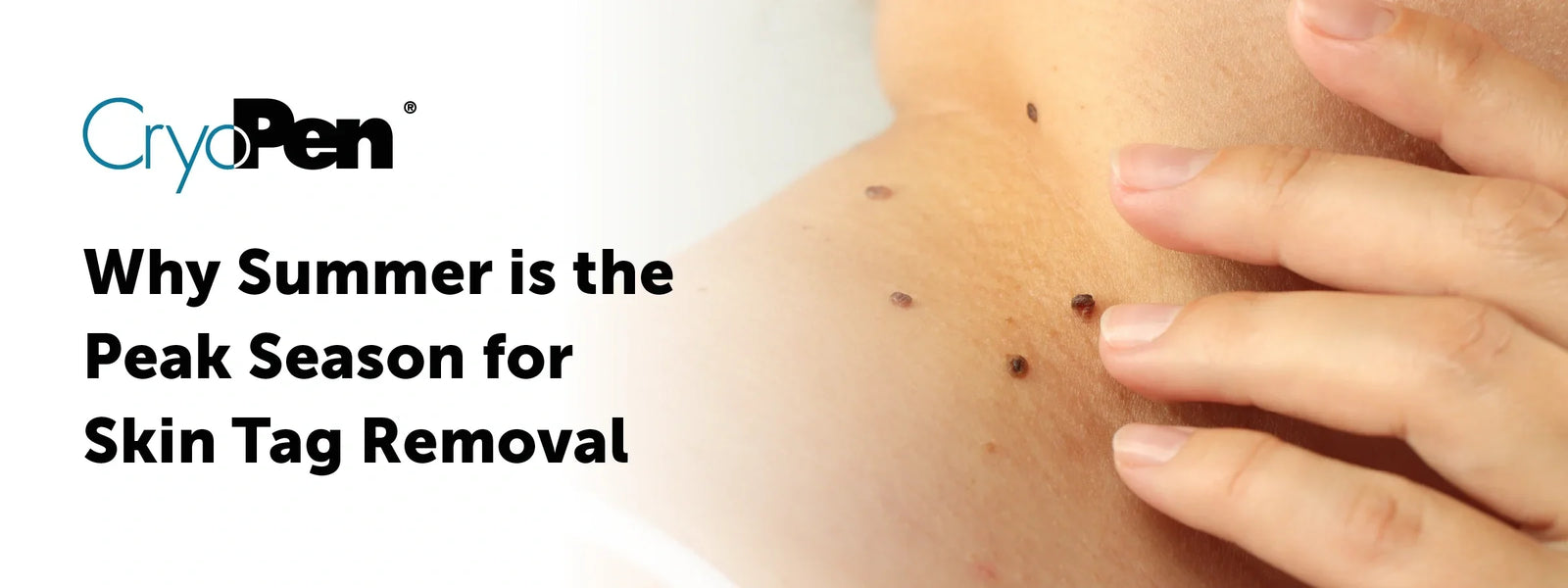

Skin tags are easy to ignore when they are hidden beneath layers of clothing. Summer can change that.
Sleeveless tops, lower necklines, swimwear and lighter clothing expose areas such as the neck, upper chest and underarms, where skin tags are commonly noticed. Tags that rub against clothing, jewellery or surrounding skin can also become more irritating when people are more active or perspiring in warmer weather.
This can lead to more people thinking about skin tag removal before holidays, weddings and other summer plans.
Summer itself is not a proven cause of skin tags, and there is no reliable UK dataset showing that summer is officially the busiest season for skin tag removal. What changes is how noticeable existing skin tags become and how motivated someone may feel to have them assessed.
For people considering professional removal, CryoPen® cryotherapy is one treatment option for suitable benign skin tags. For clinics, seasonal enquiries also create an opportunity to talk to clients about proper lesion assessment, treatment expectations and aftercare.
Why Do Skin Tags Become More Noticeable in Summer?
Skin tags are small, usually soft growths that can appear on different areas of the body. They are often found around areas where skin rubs, including the neck and skin folds.
A skin tag that causes little concern during winter may suddenly become far more noticeable once that area is exposed.
Someone may become conscious of a skin tag because it can be seen above the neckline of a top. An underarm tag may catch when shaving or rub against clothing. Jewellery can repeatedly catch tags around the neck.
Summer also brings holidays, weddings, festivals and other occasions where people may pay more attention to exposed skin.
For many people, this becomes the point when they start researching professional skin tag removal.
Does Hot Weather Cause Skin Tags?
There is no basis for saying that hot weather directly causes skin tags.
The more useful distinction is between skin tag development and skin tag awareness.
Warm weather may mean different clothing, increased perspiration and more movement. These changes can make an existing skin tag in an area of friction more noticeable or irritating.
So while summer may increase interest in removal, it should not be described as a biological cause of skin tags.
Can CryoPen® Be Used for Skin Tag Removal?
Yes. Skin tags are amongst the benign skin lesions that can be treated by a suitably trained CryoPen® practitioner following assessment.
CryoPen® is a professional cryotherapy device that applies an ultra-cold, high-pressure stream of nitrous oxide directly to the treatment area.
Different applicators can be used according to the size of the lesion. This allows the practitioner to control the treatment area closely rather than applying cryotherapy broadly across the surrounding skin.
Before treating any presumed skin tag, the practitioner should be satisfied that the lesion is suitable for cosmetic cryotherapy.
If there is uncertainty about what a lesion is, treatment should be postponed and the client referred for appropriate medical assessment.
How Does CryoPen® Treat a Skin Tag?
Cryosurgery works by applying extreme cold to unwanted tissue.
During CryoPen® treatment, nitrous oxide is directed at the lesion. Freezing causes cellular damage within the treated tissue. The practitioner assesses factors such as the lesion's size, depth, position and the client's skin before deciding how the area should be treated.
A typical treatment involves freezing the lesion, allowing the tissue to thaw and then applying a second freeze where appropriate.
Treatment time varies.
CryoPen® guidance gives approximately 10 seconds as an example treatment time for a 2 mm lesion, while practitioner protocols can vary according to the size and depth of the lesion.
This makes the actual application relatively quick for many small skin tags.
How Quickly Does CryoPen® Skin Tag Removal Work?
One point is easy to misunderstand: a quick treatment does not mean the skin is immediately healed.
The freezing application itself may take only seconds. The treated tissue then goes through a healing process.
Following treatment, some redness, slight swelling or stinging can occur. The area may become darker, blister or develop a crust or scab over the following days.
That crust should be allowed to come away naturally.
Healing commonly takes around two to six weeks, although the exact time depends on factors such as the treatment depth, location and individual healing response. Areas on the body can take longer to heal than some facial areas.
Anyone planning treatment for a particular event or holiday should therefore think about healing time as well as appointment time.
Should You Have a Skin Tag Removed Just Before a Holiday?
It depends on the type of holiday you have planned.
An appointment immediately before several days of swimming, sun exposure, saunas or intensive exercise may make following aftercare more difficult.
CryoPen® treatment guidance asks practitioners to consider recent UV exposure, degree of tanning and season when assessing treatment.
Someone who is due to leave for a beach holiday in a few days should tell their practitioner before treatment.
Delaying the appointment until after the holiday may sometimes make more sense, particularly where the treated area would otherwise be repeatedly exposed to water, strong sunlight, rubbing or heavy perspiration.
If you want a skin tag removed ahead of a holiday or event, arrange your consultation well in advance rather than assuming that the skin will be completely healed within a few days.
Can You Swim After CryoPen® Treatment?
CryoPen® patient aftercare recommends avoiding swimming during the first three days after treatment.
The treated area should initially be kept as dry as practical while it begins to heal.
The same guidance advises avoiding saunas, steam rooms, sunbeds and excessive exercise that causes sweating during this early period.
Once the area has scabbed and healing is progressing, normal activities can gradually resume in line with the advice from the treating practitioner.
This is particularly relevant during summer when swimming pools, beaches and water-based activities may already be part of someone's plans.
What About Exercise and Sweating?
Excessive sweating should also be considered when planning treatment.
Skin tags frequently occur in areas such as the underarms or groin, where heat, perspiration and bacteria can make wound care more difficult.
CryoPen® aftercare may include additional protection for treatment sites in these areas. The practitioner should explain how the area should be cared for according to its location and the client's circumstances.
Friction should also be minimised while the skin heals.
This may mean modifying exercise, clothing or other activities that repeatedly rub against the treatment area.
Sun Exposure After CryoPen® Treatment
UV exposure deserves particular attention when CryoPen® treatment is carried out during summer.
Both hypopigmentation, where the treated skin becomes lighter, and hyperpigmentation, where it becomes darker, can occur after cryotherapy.
These colour changes may remain visible for several months and can occasionally last longer.
CryoPen® treatment guidance also notes that melanocytes, the cells responsible for skin pigment, are sensitive to cold injury. People with darker skin tones should therefore be counselled carefully about the possibility of pigment changes before treatment.
Once a scab has naturally fallen away, the aftercare guidance recommends protecting treated pigmentation areas with SPF50 while repigmentation takes place.
A practitioner should also take recent tanning and anticipated UV exposure into account when deciding whether it is the right time to treat.
What Does the Skin Look Like After CryoPen®?
The exact response varies according to the lesion and treatment.
Residual stinging, redness and slight swelling can occur shortly after treatment. Over the following days the lesion can become darker, and a crust or scab may develop.
Blistering can also occur.
The scab forms part of the healing process and should not be deliberately picked or removed. Pulling it away prematurely can delay healing and may leave the underlying skin more vulnerable.
Newly healed skin may initially appear pink, brown, lighter or shinier than the surrounding area before its colour gradually settles.
Clients should follow the specific aftercare instructions given by their practitioner rather than applying creams, antiseptics or other products without being advised to do so.
How Many CryoPen® Treatments Are Needed for a Skin Tag?
Many lesions can respond to one treatment, but one session cannot be guaranteed for every skin tag.
The result can depend on the size, depth and location of the lesion, the treatment performed and the individual's response.
Where further treatment is required, the skin needs sufficient time to heal before another session.
A follow-up allows the practitioner to check the treatment result and decide whether anything further is required.
Is Every Skin Tag Suitable for CryoPen®?
No skin growth should be treated purely because somebody believes it looks like a skin tag.
Assessment comes first.
CryoPen® consultation guidance asks practitioners to consider the client's medical history alongside the characteristics of the lesion. Factors such as location, skin type, recent UV exposure, lesion size and number can influence treatment planning.
Cryotherapy also has contraindications and medical considerations. These can include impaired sensation or circulation, open wounds, hypersensitivity to cold, certain wound-healing concerns and other health conditions.
Clients should give their practitioner accurate information about medical conditions, medicines and previous problems with wound healing.
Where a lesion cannot confidently be identified as appropriate for treatment, it should not simply be frozen.
When Should a Skin Lesion Be Checked Before Removal?
A practitioner should refer rather than treat when there is uncertainty about a lesion.
This is particularly relevant where a growth does not have the expected appearance of a straightforward benign skin tag or where there are other reasons for concern.
Professional lesion recognition is therefore part of responsible skin tag treatment.
For people searching online, photographs can be misleading. Several different skin lesions can appear similar at first glance, and self-diagnosis should not replace an in-person assessment.
If you are considering CryoPen® treatment, choose a trained practitioner who includes consultation and lesion assessment before proceeding.
Why DIY Skin Tag Removal Carries Extra Risk
Summer plans can create pressure to get rid of a skin tag quickly, which is one reason home remedies and DIY removal products can look appealing.
The problem is that home removal begins with an assumption: that the growth being treated really is a skin tag.
A professional consultation gives the practitioner the opportunity to assess the lesion before treating it. Cutting, tying or freezing an unidentified growth at home does not provide that safeguard and can also lead to bleeding, infection, skin damage or scarring.
If there is any uncertainty about a lesion, getting it assessed is more appropriate than attempting to remove it yourself.
Finding a CryoPen® Practitioner for Skin Tag Removal
If you are considering treatment, look for a clinic with a practitioner who has received appropriate CryoPen® training and who carries out a proper consultation before treatment.
Ask about lesion assessment, expected healing, pigmentation changes and what you should avoid afterwards.
If you have a holiday approaching, tell the practitioner. Swimming, sun exposure, tanning, exercise and the location of the skin tag may all affect the most practical treatment date.
A good consultation should leave you understanding both the treatment and what happens during the weeks afterwards.
For further information on skin tags themselves, you can also read our guide to skin tag removal.
Why Summer Skin Tag Enquiries Matter for Clinics
For practitioners, warmer weather can create a natural conversation about benign lesion removal.
Clients may start asking about tags around the neck, underarms and other exposed areas because they have become more visible or are catching on summer clothing.
CryoPen® gives trained practitioners a professional cryosurgery system for treating suitable benign lesions, including skin tags.
Its pen-like design, interchangeable applicators and controlled nitrous oxide delivery allow treatment to be adapted to the lesion being assessed. A 2 mm lesion can take approximately 10 seconds to treat under the relevant protocol, although actual treatment time depends on the individual case.
The clinical service around the device matters as much as speed. Practitioners need to understand lesion recognition, contraindications, treatment technique, wound healing, pigment risk and referral.
Clinics considering adding benign lesion cryotherapy can learn more about CryoPen® practitioner training, which covers the theory and practical aspects required to perform treatments appropriately.
CryoPen® for Professional Skin Tag Removal
For clinics looking to add or develop a benign lesion removal service, the CryoPen® cryotherapy device can be used by trained practitioners to treat suitable skin tags alongside a wider range of benign lesions.
The device applies nitrous oxide directly to the treatment area and uses different applicators for different lesion sizes.
Professional treatment should always begin with consultation and lesion assessment, followed by clear expectations about healing and aftercare.
Summer may bring the enquiry through the door. Good assessment and appropriate treatment should decide what happens next.
Frequently Asked Questions About Summer Skin Tag Removal
Does summer cause more skin tags?
Hot weather itself should not be described as a proven cause of skin tags. Summer can make existing skin tags more noticeable because more skin is exposed and areas affected by rubbing may receive greater attention.
Can CryoPen® remove skin tags?
CryoPen® can be used by trained practitioners to treat suitable benign skin tags. The lesion should be assessed before treatment.
How long does CryoPen® take to remove a skin tag?
The application can be very quick. CryoPen® guidance gives approximately 10 seconds as an example for a 2 mm lesion. The actual treatment time depends on the size, depth and location of the skin tag.
Does the skin tag disappear immediately after treatment?
Not necessarily. Cryotherapy triggers a tissue response after treatment. The area may darken, blister or form a scab before the treated tissue naturally separates and the skin heals.
How long does skin take to heal after CryoPen®?
Typical healing is around two to six weeks, depending on the treatment depth and location. Some areas and individuals can take longer.
Can I swim after CryoPen® skin tag removal?
CryoPen® patient aftercare recommends avoiding swimming for the first three days after treatment. Follow the instructions given by your practitioner for your individual treatment.
Can I exercise after CryoPen® treatment?
Excessive exercise that causes sweating should be avoided during the initial three-day aftercare period. Activities that rub or damage the treated area may also need to be modified while it heals.
Can I go in the sun after CryoPen® treatment?
UV exposure should be discussed with your practitioner, particularly during summer. Cryotherapy can cause temporary or longer-lasting pigment changes, and recent tanning and future sun exposure can affect treatment planning.
Can darker skin tones have CryoPen® treatment?
Skin type needs to be assessed individually. Cryotherapy can cause hypopigmentation or hyperpigmentation, and darker skin has a greater consideration around pigment loss. The practitioner should discuss these risks before treatment.
How many sessions will I need?
Many lesions respond to one treatment, but some may require further sessions. The practitioner should allow the area to heal and assess the result before repeating treatment.
Should I have a skin tag removed immediately before a beach holiday?
It may be better to choose another date if the holiday involves frequent swimming, strong sun exposure, sunbathing, saunas or activities causing heavy sweating. Discuss your plans with your practitioner before booking.
What if I am not sure whether my growth is a skin tag?
Do not treat an uncertain lesion simply because it resembles one. It should be assessed first, and concerning or uncertain lesions should be referred for appropriate medical assessment.
Conclusion
Summer can make skin tags much harder to ignore. Lighter clothing exposes the neck, underarms and other areas where tags may have gone unnoticed for months, while holidays and events can give people a reason to consider removal.
CryoPen® can provide trained practitioners with a quick, targeted method of treating suitable benign skin tags, but treatment speed should not be confused with healing speed. The skin may continue healing for several weeks, and summer activities such as swimming, sun exposure and heavy exercise need to be considered when choosing an appointment date.
For patients, start with a trained practitioner and a proper lesion assessment.
For clinics, professional skin tag removal works best when precise treatment is supported by good consultation, appropriate referral and clear aftercare.