Age Spot Removal with CryoPen: A Simple Anti-Ageing Treatment for Clearer, Younger-Looking Skin
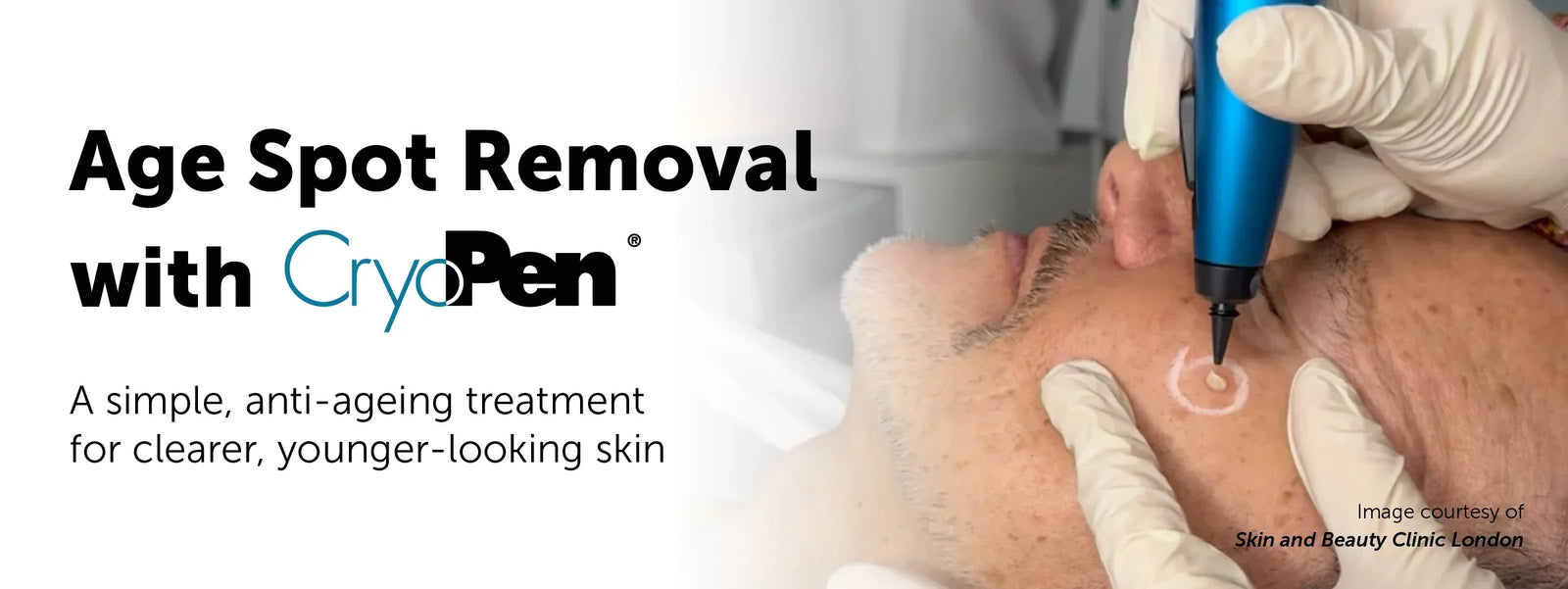

Age spots can make the skin look older, uneven or more sun damaged than it feels. If the mark is a benign sun spot, also known as a solar lentigo or solar lentigine, CryoPen can be used by a trained practitioner to freeze the unwanted pigmented tissue with controlled cryotherapy.
CryoPen is a precision cryotherapy device used in clinics for the removal of benign skin lesions. It uses nitrous oxide to create an intense freezing effect directly on the selected lesion. Because the treatment is targeted, the practitioner can focus on the age spot rather than treating a wide area of surrounding skin.
For UK patients, the most important point is that the mark must be assessed before treatment. Brown marks are not always simple age spots. Some pigmented lesions can look similar to benign pigmentation but may need medical assessment. If your practitioner is not fully confident that the lesion is benign and suitable for cryotherapy, it should not be treated with CryoPen until it has been reviewed through an appropriate medical route.
This guide explains how CryoPen age spot removal works, what usually happens during the appointment, what the skin may look like afterwards, and how to care for the treated area during healing..
What Are “Age Spots” (Solar Lentigines)?
 Age spots are flat brown patches caused by long-term UV exposure. You’ll often see them on the face, hands, arms, shoulders and chest.
Important: not every brown mark is an age spot. A trained practitioner must assess the lesion first. If anything looks suspicious or changing, you should be referred for medical assessment before cosmetic treatment.
How CryoPen Removes Age Spots
 CryoPen removes suitable benign age spots by using cryotherapy. Cryotherapy is the controlled destruction of unwanted tissue through the precise application of extreme cold.
CryoPen delivers nitrous oxide directly to the lesion. The freezing action damages the targeted cells in the pigmented area. As the treated tissue responds, the age spot may darken, crust and lift away during healing. New skin then forms underneath.
Based on our CryoPen training guidance, cryosurgery works by freezing the cell fluid and forming ice crystals that damage the cell membrane. The device is designed to deliver cold directly to the lesion, helping the practitioner work with precision.
For age spots and pigmentation, correct treatment intensity matters. Our CryoPen troubleshooting guide makes it clear that pigmentation is usually treated with a short freeze, and darker skin types may need a softer freeze approach because pigment-producing cells are sensitive to cold injury.
Think of it as:
Freeze the selected age spot
The treated pigment darkens and forms a crust
The crust lifts naturally as the skin heals
New skin appears underneath
The final colour continues to settle over the following weeks or months
CryoPen is not a general skin brightening treatment. It treats selected benign lesions. It does not stop new age spots from forming elsewhere, especially if the skin continues to be exposed to UV without protection.
What Happens During A CryoPen Appointment?
Most clinics follow a simple flow:
1) Consultation And Skin Check
-
Your practitioner confirms the mark is appropriate to treat
-
You’ll discuss risks (especially pigment changes) and aftercare
-
Photos may be taken for your records
2) The CryoPen Freeze
-
The treatment itself is quick (often seconds per lesion)
-
You may feel a sharp cold sting that settles quickly
3) Immediate Post-Treatment Appearance
Right after treatment, the area may look:
-
Red or slightly swollen
-
Paler/frosted briefly during the freeze
-
Darker within hours to days (common as the healing response begins)
Age Spots Healing Timeline: What You’ll See Day By Day
Every person heals differently. Healing depends on the site treated, the freeze time, skin type, skin health, lesion depth and how well the area is protected after treatment.
CryoPen patient guidance states that healing typically occurs over 2 to 6 weeks depending on the length of freeze and the location. Some areas heal faster than others. Lesions on the face may settle more quickly than lesions on the body, hands or lower legs.
First 24 Hours
On the first day after CryoPen age spot removal, you may notice redness, warmth, tenderness, stinging or slight swelling.
This is a normal early response. CryoPen aftercare guidance states that residual stinging, redness and slight swelling can occur and may last for a few hours.
A blister may begin to form within a few hours or by the next day. If this happens, do not intentionally pop it. The blister helps protect the area and supports separation of the treated tissue.
The treated spot may also start to look darker. This is common with pigmentation treatments and does not necessarily mean the treatment has failed.
Days 2–7
During the first week, the treated age spot usually becomes darker and begins to form a dry crust or scab. This can look brown, darker brown or almost black depending on the original pigmentation and the skin response.
This stage is expected. CryoPen aftercare guidance states that treated lesions can turn darker and develop a crust over the next few days.
Do not pick the crust off. Picking can increase the risk of infection, scarring, delayed healing and pigment changes. If the scab comes away too early, the skin underneath may still be open and will need extra protection.
Some people may continue to have a blister, tenderness or mild swelling during this stage. If the treated area is in a place that rubs against clothing, the practitioner may advise using a plaster during the day to protect it.
Weeks 2–6
The crust should come away naturally when the skin underneath is ready. Once it sheds, the new skin may look pink, shiny, pale, brown or slightly different in colour from the surrounding skin.
This is not always scarring. CryoPen aftercare guidance explains that after the crust falls away, the new skin may appear shiny pink or brown and will repigment over the following weeks. In some cases, colour change can take several months to settle.
Healing may continue for up to 6 weeks. If the area has not healed after 6 weeks, you should contact your treatment provider.
In some cases, the treated age spot may not clear fully after one session. This can happen if the pigmentation is deeper. CryoPen troubleshooting guidance explains that a treated age spot may appear darker if the first treatment has reached closer to the deeper pigment but has not fully removed it. Further treatment may be considered once the skin has fully healed and the practitioner has reassessed the area..
Age Spot Removal Aftercare: How To Help It Heal Well

Good aftercare helps reduce the risk of infection, delayed healing, scarring and pigment changes. Your practitioner’s advice should always come first because they have assessed your skin and the area treated.
The main aims are simple:
-
Keep the area clean and protected
-
Avoid unnecessary moisture early on
-
Do not pick, scratch or rub the scab
-
Protect the area from trauma
-
Avoid applying products unless advised
-
Use SPF once the skin has closed and your practitioner confirms it is appropriate
Keep It Dry Early On
CryoPen aftercare guidance recommends keeping the area as dry as possible while healing, especially during the first few days.
For the first 3 days, be careful when showering and avoid washing the treated area directly. Avoid soaking the area or exposing it to environments that increase moisture, sweating or bacterial risk.
For the first few days, avoid:
Swimming
Saunas
Steam rooms
Sunbeds
Excessive exercise that causes sweating around the treated area
Long baths
Soaking the area in water
You can usually return to normal daily activities, but you should protect the treated area from damage or abrasion. Once the area has scabbed and is dry, your practitioner may advise you to gradually return to your usual routine.
Don’t Pick Or Scratch
Do not pick, scratch or pull off the scab.
The scab is part of the natural healing process. It protects the skin underneath while new skin forms. Removing it too early can leave an open wound, increase infection risk and delay healing.
If the scab comes off accidentally, check whether the skin underneath is open. If it is open, treat it as a wound and follow your practitioner’s advice. If you are unsure, contact the clinic.
Picking can also increase the risk of pigmentation problems. This is especially important after age spot removal because the treatment area is already linked to pigment change.
Protect From Rubbing
If the treated area is likely to rub against clothing, jewellery, shoes, straps or bedding, protect it.
A plaster may be useful during the day if the area is at risk of friction or bacteria. CryoPen aftercare guidance mentions that high-bacterial areas, such as the underarms or groin, may need protection during the day, with the area washed in the evening and left uncovered at night so the skin can breathe.
For age spots on the hands, chest, arms or face, your practitioner may give different advice depending on location. Do not cover the area unnecessarily if your practitioner has advised leaving it open and dry.
Use SPF
Once the scab has fallen away and the skin has closed, sun protection becomes one of the most important parts of aftercare.
CryoPen aftercare guidance advises using SPF50 on pigmentation removal once the scab has fallen off, until the area has repigmented.
This matters because new skin is more vulnerable to UV exposure. Sun exposure too early can increase the risk of darker pigmentation returning, uneven tone or visible contrast between treated and untreated skin.
Daily SPF is also important long term because UV exposure is one of the main reasons new age spots develop elsewhere.
For best results:
-
Use broad-spectrum SPF50 once the skin has closed
-
Avoid sunbeds completely
-
Do not tan the treated area while it is healing
-
Use hats, gloves or clothing to protect exposed areas where appropriate
-
Reapply SPF as advised, especially if outdoors
If the area was tanned before treatment, the healed skin may look lighter than the surrounding tanned skin. This is because the treated area can lose the tan as it heals. Colour may blend more evenly as the surrounding tan fades and the treated skin matures.
Pigment Changes: What UK Patients Need To Know
Cryotherapy can sometimes cause:
-
Hypopigmentation (lighter patch)
-
Hyperpigmentation (darker patch)
If you have a deeper skin tone, pigment-producing cells can be more sensitive to cold injury. That means you should have a more detailed suitability discussion before treatment and follow aftercare closely.
When To Contact Your Practitioner Or GP
Get advice urgently if you notice:
-
Increasing pain, spreading redness, pus, or signs of infection
-
Bleeding that won’t stop with steady pressure
-
Black edges or worsening tissue breakdown
-
Fever or feeling unwell after treatment
FAQs
How many sessions do age spots need?
Many age spots respond in a single session, but some can need a second treatment depending on depth and location.
Will my age spots come back?
Treated spots may clear, but new age spots can form over time if UV exposure continues. SPF is key for prevention.
What if I get a blister?
Blistering can happen. Don’t intentionally pop it. If it opens, keep it clean and follow the aftercare advice you were given.
Can I cover it with make-up?
Usually you’ll be advised to avoid make-up on an open/healing wound. Your practitioner will tell you when it’s safe based on the site and healing stage.